
For most patients, driving is an everyday necessity. Whether commuting, running errands, or working on the road, your patients face constant visual challenges that can affect comfort and safety. By recommending HOYA EnRoute and EnRoute Pro lenses, you can help them drive with greater confidence, reduce eye strain, and enjoy a more relaxed experience behind the wheel.
Understanding the Driving Patient’s Needs
Research from HOYA shows that driving is one of your patients’ most common daily activities.¹ Those who spend significant time on the road—commuters, professional drivers, or active adults—face repeated visual demands that standard lenses may not fully address.
Consider the lifestyle factors that often affect these patients:
- Frequent long drives or daily commuting
- Exposure to bright lights, reflections, and oncoming headlights
- Constant focus shifts between the road, dashboard, mirrors, and navigation devices
- Evening or nighttime driving, when contrast and visibility are reduced
Meeting these needs matters because vision directly affects comfort, focus, and reaction time. With the right lens solution, you can help your patients reduce eye strain, improve clarity, and maintain alertness, especially during longer drives or in challenging light conditions.
Explaining the Practical Benefits of EnRoute
Vision plays a key role in driving safety—studies show that 90% of a driver’s reaction time relies on vision.² EnRoute lenses are engineered specifically for drivers, addressing the visual stress and glare that can make driving tiring or uncomfortable.
Here’s how EnRoute benefits your patients:
- Reduces glare from headlights, streetlights, and reflections
- Improves contrast and brightness perception in low-light conditions like dusk, fog, or rain
- Provides stable vision at far distances and in the periphery
- Makes it easier to shift focus between the dashboard, mirrors, and the road ahead
- EnRoute Pro offers additional support for nighttime driving
These features help your patients stay focused, reduce fatigue, and navigate roads with more confidence, whether they’re driving during the day or night.
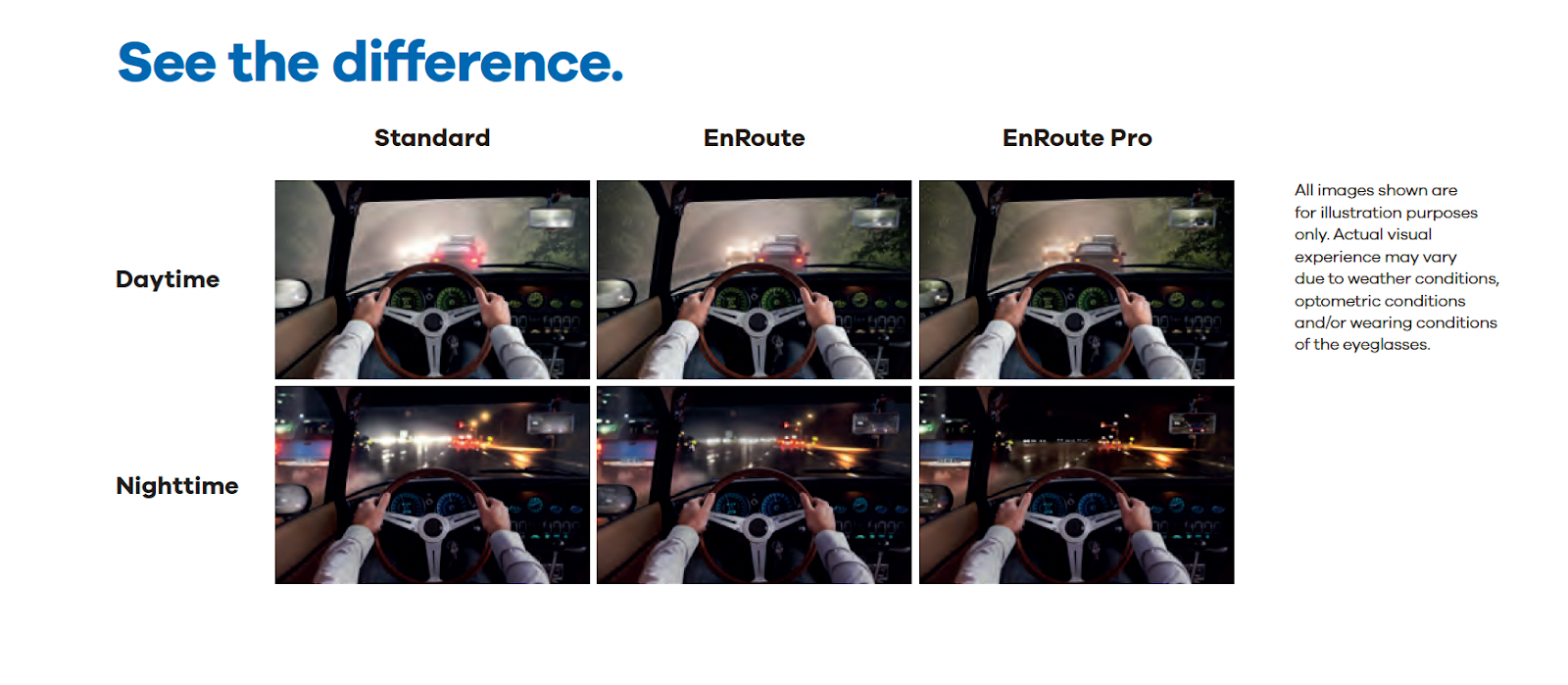
Differentiating EnRoute and EnRoute Pro
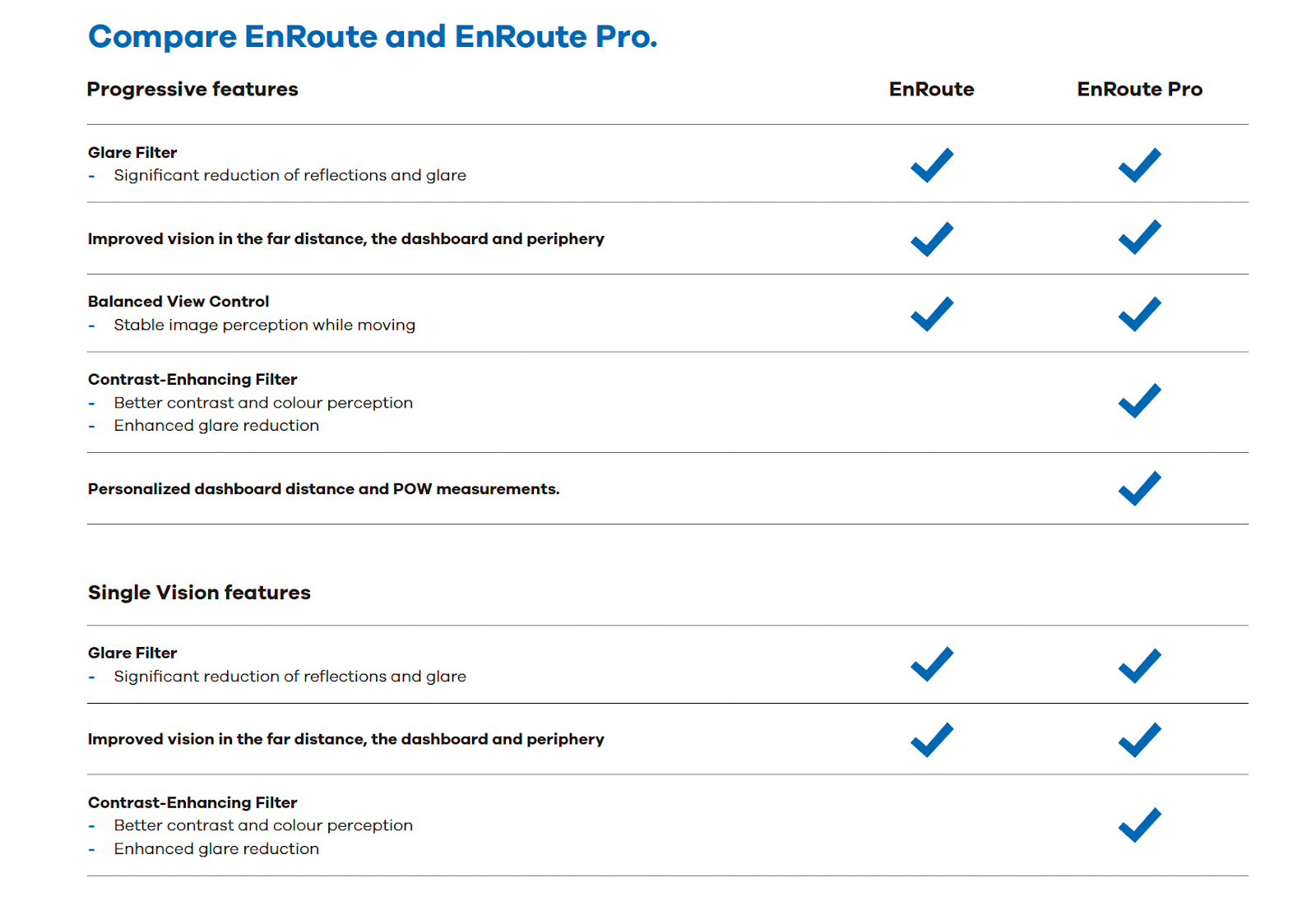
Both EnRoute and EnRoute Pro are designed to enhance comfort, clarity, and safety for drivers—and both are available as single vision and progressive lenses. This comparison chart highlights the unique features of each option, so you can help patients choose the lens that best fits their needs.
Talking Points for Patient Conversations
Introducing EnRoute doesn’t require technical jargon. Use questions that connect to your patients’ everyday experiences:
- “How much time do you spend driving each day or week?”
- “Have you found that your eyes feel tired or strained after long drives?”
-
- “Do you ever notice difficulty seeing road signs, pedestrians, or obstacles clearly at a distance–even with your current prescription glasses?”
- “Do you ever notice difficulty seeing road signs, pedestrians, or obstacles clearly at a distance–even with your current prescription glasses?”
-
- “Do you notice glare from street lights or headlights while driving?”
- “Do you have difficulty focusing on the dashboard or mirrors?”
- “Do you notice glare from street lights or headlights while driving?”
When discussing EnRoute, emphasize the practical benefits: clearer vision, less eye fatigue, and a more relaxed driving experience. Framing it in terms of your patients’ daily challenges makes the solution tangible and relevant for them.
Standard lenses may not always meet the demands your patients face on the road. By recommending HOYA EnRoute lenses, you can help them reduce glare, improve low-light vision, and enjoy safer, more comfortable driving.