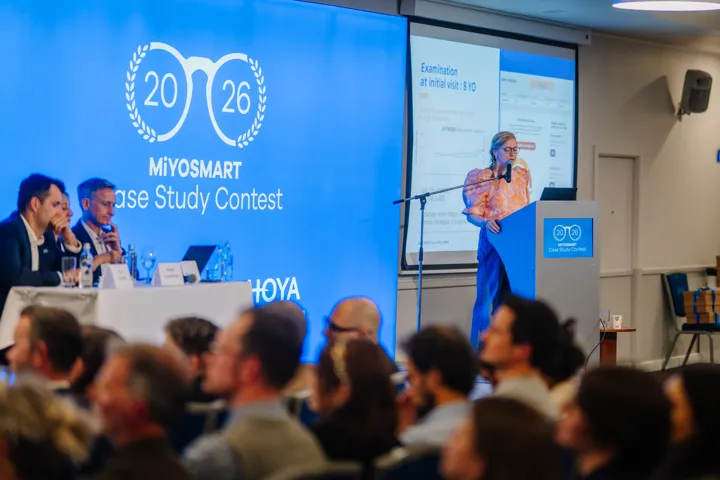
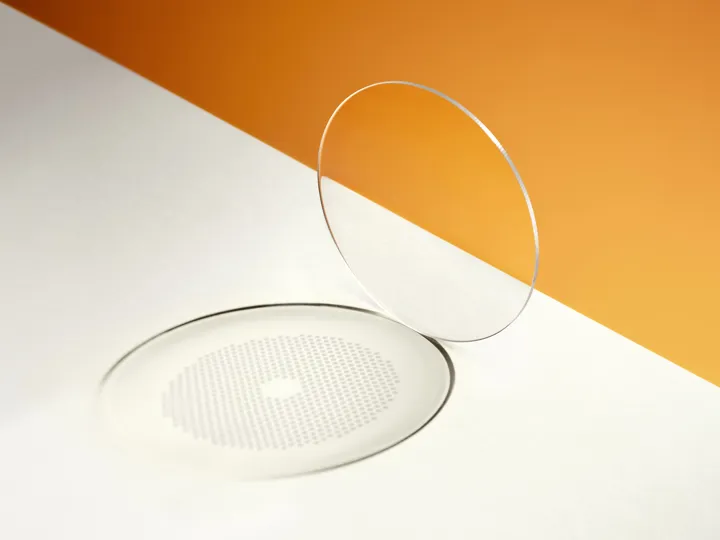
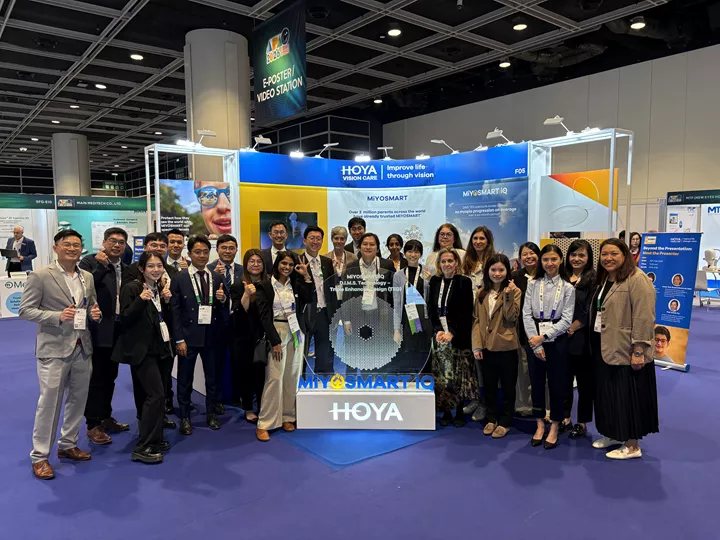
With over 100 peer-reviewed papers¹ on D.I.M.S. Technology, HOYA has built a strong evidence based myopia management offering, continuously refining its approach. Discover HOYA's myopia management solutions

Myopia management

Myopia is a Global Concern

By 2050, half of the world’s population could be living with myopia.²

The condition progresses fastest in children under 10,³ especially those with high myopia. More than just a vision issue, myopia can impact a child’s confidence, independence, and daily life.

At HOYA Vision Care, we are committed to tackling this global challenge with innovative solutions, helping children see clearly and live fuller, more confident lives.

video thumbnail

Together we are shaping the future of vision care

Myopia: biggest eye health threat, set to affect 50% by 2050.²

At HOYA, we are dedicated to improving every child's vision health and raising awareness about myopia. We urge governments and health organizations to prioritize myopia for early detection and education. #ActNow

Myopia progression can be controlled, not only corrected.

Most spectacle lenses simply help the child see clearly. While they correct vision, they don't help manage how myopia progresses over time - that's why HOYA created MiYOSMART.

MiYOSMART iQ

Raising the bar in myopia control

An evolved approach to myopia control

Years of research and clinical experience have fundamentally changed the way we manage childhood myopia. Today, myopia management has become a major focus of innovation in pediatric eye care, enabling earlier intervention and more effective outcomes for children. Acting early is no longer optional - it is essential.

Introducing MiYOSMART iQ, HOYA’s most advanced myopia control spectacle lens that marks a new era for D.I.M.S. Technology by combining it with a new Triple Enhanced Design (DIMS TED), delivering stronger outcomes for children who need more. 


Read more about MiYOSMART iQ

MiYOSMART

The smart way to manage myopia in children
Boy wearing HOYA MiYOSMART lenses

An innovative spectacle lens

MiYOSMART based on revolutionary Defocus Incorporated Multiple Segments (D.I.M.S.) Technology was developed in cooperation with The Hong Kong Polytechnic University in 2014. MiYOSMART is easy to fit, just like regular single vision lens. There are no limitations for the frame choice.

In 2018, the MiYOSMART lens won the Gold Prize, Grand Award & Special Gold Award International Exhibition of Inventions of Geneva, Switzerland. In 2020, it won the Silmo d’Or Award in the Vision category at the Silmo Paris Optical Fair.

Read more about MiYOSMART
Boy wearing HOYA MiYOSMART lenses

Keeping in the know

The Latest News from MiYOSMART

The outstanding products and excellence in service

At HOYA, we are ready to answer any questions you might have, explore our potential partnership and hear the ideas you want to share with us. Get in touch with us by completing the form below.

Disclaimer

MiYOSMART has not been approved for myopia management in all countries, including the U.S., and is not currently available for sale in all countries, including the U.S.

MiYOSMART spectacle lenses may not be able to address individuals’ conditions due to natural deficiencies, illness, pre-existing medical conditions and/or advanced age of consumers. The information contained herein is for general information and is not intended to constitute medical advice. Please consult your Eye Care Professional for more information prior to the use of MiYOSMART spectacle lenses.

References

  1. (1)

    Based on the number of publications in peer-reviewed publications according to HOYA’s data on file as of Nov 25.

  2. (2)

    Holden B.A., Fricke T.R., Wilson D.A., Jong M., Naidoo K.S., Sankaridurg P., Wong T.Y., Naduvilath T.J., Resniko S. Global Prevalence of Myopia and High Myopia and Temporal Trends from 2000 through 2050. American Academy of Ophthalmology. 05/2016, vol.123, no. 5, p.1036–1042.

  3. (3)

    Qian Z, Peng T, Lou J ,et al. Myopia progression and stabilization in school-aged children with single-vision lenses. Acta Ophthalmol. 2022; 100(4):e950-e956.